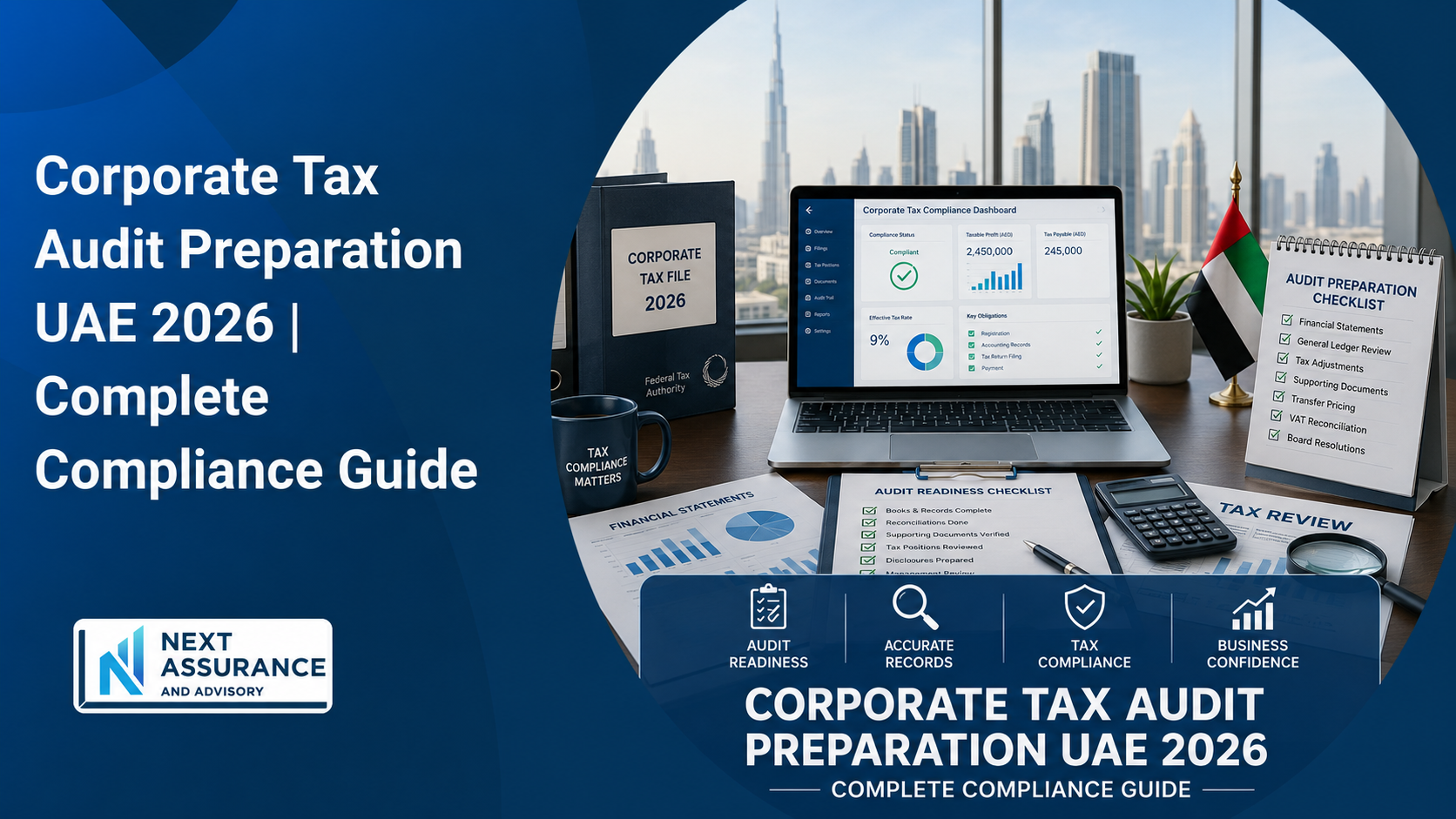
The introduction of Corporate Tax has significantly changed the compliance landscape for businesses across the UAE. While many organizations focus on tax registration and filing, preparing for a potential Corporate Tax Audit in UAE is equally important.
A tax audit can be a routine compliance review or a detailed examination of your financial records and tax positions. Businesses that maintain accurate records, strong internal controls, and proper documentation are better positioned to handle audits efficiently and avoid penalties.
In this guide, Next Assurance explains everything businesses need to know about Corporate Tax Audit Preparation UAE, including audit requirements, documentation, common mistakes, and best practices for 2026.
What is a Corporate Tax Audit in UAE?
A Corporate Tax Audit is a review conducted by the Federal Tax Authority (FTA) to verify whether a business has correctly complied with UAE Corporate Tax regulations.
The audit may involve examining:
- Financial statements
- Tax returns
- Accounting records
- Revenue recognition practices
- Expense classifications
- Transfer pricing documentation
- Supporting business records
The purpose is to ensure businesses accurately calculate taxable income and meet all compliance obligations.
Why Corporate Tax Audit Preparation Matters
Many businesses assume audits only happen when there is an issue. However, audits can occur as part of standard regulatory oversight.
Proper preparation helps businesses:
Avoid Penalties
Incorrect filings, missing records, or inaccurate reporting can lead to financial penalties.
Improve Compliance
Regular reviews help identify issues before regulators do.
Reduce Business Disruption
Organized documentation makes audit processes faster and smoother.
Build Stakeholder Confidence
Strong compliance demonstrates professionalism and sound governance.
Who May Be Selected for a Corporate Tax Audit?
Any registered business may be selected for review.
Factors that could increase audit attention include:
- Significant fluctuations in reported income
- Large deductions or expenses
- Consistent losses over multiple years
- Related-party transactions
- Transfer pricing arrangements
- Incomplete tax filingsErrors in financial reporting
Businesses should maintain readiness regardless of their size or industry.
Key Documents Required for Corporate Tax Audit Preparation
Proper record-keeping is one of the most important aspects of audit readiness.
Financial Statements
Maintain complete and accurate financial statements prepared according to applicable accounting standards.
Documents include:
- Balance Sheet
- Profit & Loss Statement
- Cash Flow Statement
- Notes to Accounts
Tax Returns
Keep copies of all submitted corporate tax returns, amendments, and supporting schedules.
Accounting Records
Maintain detailed records of:
- Sales invoices
- Purchase invoices
- Credit notes
- Payment records
- Bank statements
- General ledgers
Corporate Documents Include:
- Trade licenses
- Shareholder agreements
- Memorandum of Association
- Business registration documents
Transfer Pricing Documentation
Businesses involved in related-party transactions should maintain appropriate transfer pricing documentation and supporting evidence.
Corporate Tax Audit Preparation Checklist
Preparing in advance can significantly reduce compliance risks.
Review Financial Records
Verify that all financial information is accurate and complete.
Check for:
- Missing transactions
- Incorrect entries
- Duplicate records
- Reconciliation issues
Verify Tax Calculations
Ensure taxable income calculations align with UAE Corporate Tax regulations.
Review:
- Revenue recognition
- Allowable deductions
- Tax adjustments
- Exempt income classifications
Reconcile Financial Statements
Financial statements should reconcile with:
- Tax returns
- VAT records
- Accounting systems
- Bank records
Review Related-Party Transactions
Ensure all transactions are properly documented and supported.
Include:
- Contracts
- Pricing methodologies
- Transfer pricing analysis
- Supporting calculations
Assess Internal Controls
Strong internal controls help reduce errors and strengthen compliance.
Evaluate:
- Approval processes
- Segregation of duties
- Documentation controls
- Reporting procedures
Common Corporate Tax Audit Mistakes
Many businesses face challenges due to avoidable compliance issues.
Incomplete Documentation
Missing invoices or supporting records can create audit complications.
Poor Record Retention
Businesses must maintain records for the required retention period.
Incorrect Expense Classification
Improperly categorized expenses may trigger additional review.
Weak Internal Controls
Lack of oversight increases the risk of reporting errors.
Transfer Pricing Non-Compliance
Related-party transactions without supporting documentation can create significant audit risks.
Best Practices for Audit Readiness
Maintain Real-Time Records
Avoid waiting until year-end to organize financial information.
Conduct Internal Reviews
Regular compliance reviews help identify issues early.
Implement Strong Accounting Systems
Technology improves accuracy and reporting consistency.
Train Finance Teams
Employees should understand Corporate Tax requirements and reporting obligations.
Work with Professional Advisors
Expert guidance helps businesses stay updated with changing regulations.
The Role of Internal Audits in Corporate Tax Compliance
Internal audits can significantly improve tax readiness.
Benefits include:
- Early identification of compliance risks
- Improved documentation quality
- Stronger governance practices
- Better financial reporting accuracy
- Enhanced audit preparedness
Many businesses use internal audits as a proactive compliance tool before external regulatory reviews.
How Next Assurance Can Help
At Next Assurance, we help businesses across Dubai and the UAE prepare for Corporate Tax compliance and audit readiness.
Our services include:
Corporate Tax Advisory
Expert guidance on UAE Corporate Tax requirements.
Financial Statements Audit
Independent reviews that improve financial reporting quality.
Tax Compliance Reviews
Identification of compliance gaps and potential risks.
Internal Audit Services
Strengthening governance and internal controls.
CFO & Financial Management Support
Strategic financial oversight and compliance planning.
Corporate & Transactional Advisory
Support for business structuring and regulatory compliance.
Whether you are preparing for your first Corporate Tax filing or strengthening long-term compliance processes, our team can help reduce risk and improve audit readiness.
Conclusion
As Corporate Tax regulations continue to evolve, businesses should view audit preparation as an ongoing process rather than a one-time exercise.
Maintaining accurate records, implementing strong controls, and conducting regular compliance reviews can help organizations navigate audits confidently while minimizing regulatory risks.
With proper planning and expert support from Next Assurance, businesses can stay compliant, protect their reputation, and focus on sustainable growth.